2026 Winter PHEV Efficiency Test: 5 SUVs with the Lowest Range Loss Below 0°C
Sub-zero (-5°C) PHEV efficiency test comparing vapor-injection heat pump SUVs against HV-PTC resistive heaters: internal cell resistance, 30% range gap, and pre-conditioning telemetry.
Introduction & Thermodynamic Realities: What Happens to Lithium-Ion Batteries Below 0°C?
As winter descends across Europe, the most common shock for Plug-in Hybrid (PHEV) owners is watching their dashboard's estimated pure electric range shrink by 25% to 40% overnight. Why does a modern SUV capable of delivering 100 kilometres of zero-emission driving at +20°C in spring suddenly drop to 65–72 kilometres when the thermometer hits -5°C, often firing up its internal combustion engine (ICE) unexpectedly?
This drop is neither a software glitch nor permanent battery degradation; it is the direct consequence of electrochemical kinetics, fluid mechanics, and cabin thermodynamics. When a lithium-ion (NMC or LFP) cell drops below 0°C, three fundamental physical bottlenecks occur:
- Electrolyte Viscosity and Reduced Ionic Conductivity: The organic liquid electrolyte inside the cells thickens in sub-zero temperatures. The rate at which lithium ions (Li⁺) de-intercalate from the cathode, migrate through the separator, and intercalate into the graphite anode slows down dramatically.
- Multiplying Internal Resistance (Rinternal): Cell internal resistance—normalized at 1.0 unit at +20°C—increases by roughly 1.8x at 0°C and 2.8x to 3.2x at -10°C. When the driver demands strong acceleration, drawing high current causes an immediate voltage drop (voltage sag) across the terminals according to I² × R ohmic losses.
- Lithium Plating Protection: To prevent rapid ion insertion into a freezing anode from forming metallic lithium dendrites (which can permanently damage capacity or cause internal short circuits), the Battery Management System (BMS) restricts both peak discharge power and regenerative braking current by up to 50%.
[!IMPORTANT]
Why Does the Petrol Engine Start Prematurely in Winter?
Even when your battery state of charge (SoC) reads 60%, demanding heavy throttle to merge onto a motorway at -5°C pulls cell terminal voltage close to its lower cutoff threshold. To protect the cells, the BMS immediately caps electric motor output and commands the petrol engine to fire up. The cold engine's initial fuel-enrichment phase then drives up short-trip fuel consumption.
To simulate your exact winter electric range based on your daily route, ambient temperature, and motorway speed, use our interactive Range Calculator.
Heat Pump vs. High-Voltage PTC Heaters: The Physics Behind a 30% Range Gap
During European winters, the single largest drain on a PHEV's electric range is not electrochemical capacity contraction—it is the cabin and battery thermal heating architecture. When driving in pure EV mode with the combustion engine off, there is no "free" waste heat from an engine block. Automakers address this challenge using two distinct engineering approaches:
1. High-Voltage PTC (Positive Temperature Coefficient) Resistive Heaters
Many compact and mid-size PHEVs on the European market rely on 400V high-voltage ceramic PTC resistive heaters due to lower manufacturing cost and compact packaging.
- Operating Principle: Converts electrical energy directly into Joule heat. Its Coefficient of Performance (COP) is at best 0.95 to 1.0—meaning 1 kW of battery electricity yields at most 1 kW of thermal heat.
- The Range Penalty: On a frosty morning at -5°C, warming the cabin to 21°C and defogging the windscreen requires the PTC heater to draw 4.5 to 5.5 kW during the first 15 minutes, followed by a continuous 2.5 to 3.5 kW draw. On a 1-hour urban commute averaging 35 km/h, cabin heating alone consumes 3.2 kWh of net battery energy. In a PHEV with a 14–19 kWh usable battery, 18% to 25% of total energy vanishes before ever reaching the wheels.
2. Vapor-Injection Heat Pump Systems
Pioneered by Japanese engineering leaders such as Toyota (Toyota RAV4 PHEV (2026), Toyota Prius PHEV) and Mitsubishi (Mitsubishi Outlander PHEV (2025)).
- Operating Principle: Instead of generating heat from scratch via electrical resistance, a heat pump extracts low-grade thermal energy from the outside ambient air, inverter coolant loop, and electric motors, compressing the refrigerant to transfer high-grade heat into the cabin.
- Efficiency Advantage: Even at -5°C ambient temperature, a gas-injection heat pump achieves a Coefficient of Performance (COP) of 2.3 to 2.9. Delivering 3.5 kW of heat into the cabin requires only 1.2 to 1.5 kW of electrical power from the battery.
- The Verdict: Simply equipping a heat pump creates a 14% to 20% net electric range advantage below 0°C between two SUVs with identical battery capacities.
[!NOTE]
Volkswagen Group's MQB Evo (Tiguan / Kodiaq) Thermal Strategy:
In the 25.7 kWh gross (19.7 kWh net) battery pack shared by the Volkswagen Tiguan eHybrid and Škoda Kodiaq iV, VW Group pairs a multi-way electronic thermal valve manifold with a high usable battery buffer rather than an air-source heat pump. Waste heat from the inverter and e-motor warms the battery loop, while 11 kW AC grid pre-conditioning offsets initial cabin heating losses.
2026 Winter PHEV SUV Efficiency & Range Test Table (+20°C vs. -5°C)
The engineering table below compares Europe's top 5 long-range PHEV SUVs (alongside the aerodynamic benchmark Prius and previous-generation PTC baseline Kuga), contrasting +20°C official WLTP figures against real-world winter performance at -5°C (cabin set to 21°C, winter tyres fitted, mixed urban/suburban cycle):
| Make & Model | Battery (Gross / Net) | Thermal & Heating Architecture | Official WLTP Range (+20°C) | Real Winter Range (-5°C) | Winter Range Loss (%) | Depleted Winter Fuel (-5°C) |
|---|---|---|---|---|---|---|
| Toyota RAV4 PHEV (2026) | 22.7 / 21.2 kWh | Vapor-Injection Heat Pump | 100 km | 81.5 km | -18.5% | 6.4 L/100 km |
| Mitsubishi Outlander PHEV | 22.7 / 19.1 kWh | Heat Pump + Active Battery Warming | 86 km | 68.6 km | -20.2% | 7.3 L/100 km |
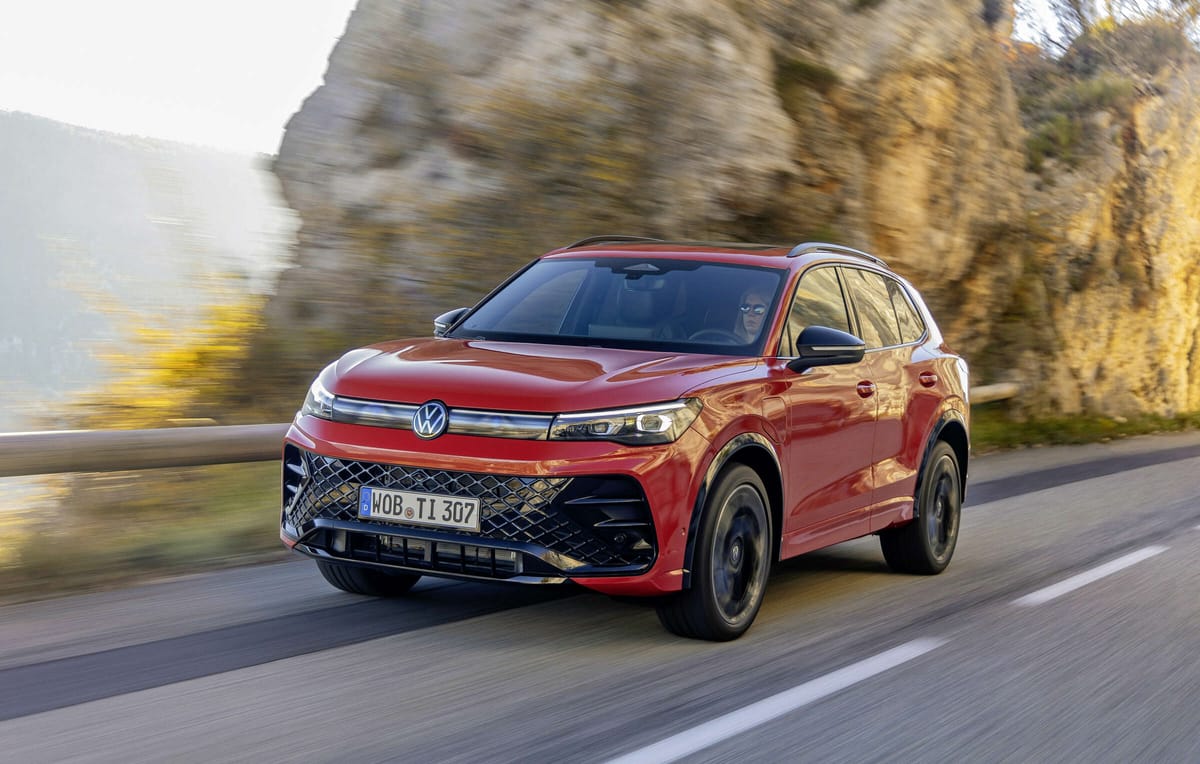
| Volkswagen Tiguan eHybrid | 25.7 / 19.7 kWh | Multi-Valve Thermal Loop + HV-PTC | 118 km | 89.9 km | -23.8% | 6.8 L/100 km |
| Škoda Kodiaq iV (2025) | 25.7 / 19.7 kWh | MQB Evo Thermal Circuit + HV-PTC | 123 km | 92.8 km | -24.5% | 7.0 L/100 km |
| BYD Seal U DM-i Comfort | 26.6 / 23.5 kWh | Direct-Refrigerant Plate + PTC | 125 km | 92.5 km | -26.0% | 6.9 L/100 km |
| Reference: Toyota Prius PHEV | 13.6 / 10.9 kWh | Heat Pump + Cd 0.24 Aero | 86 km | 71.0 km | -17.4% | 4.8 L/100 km |
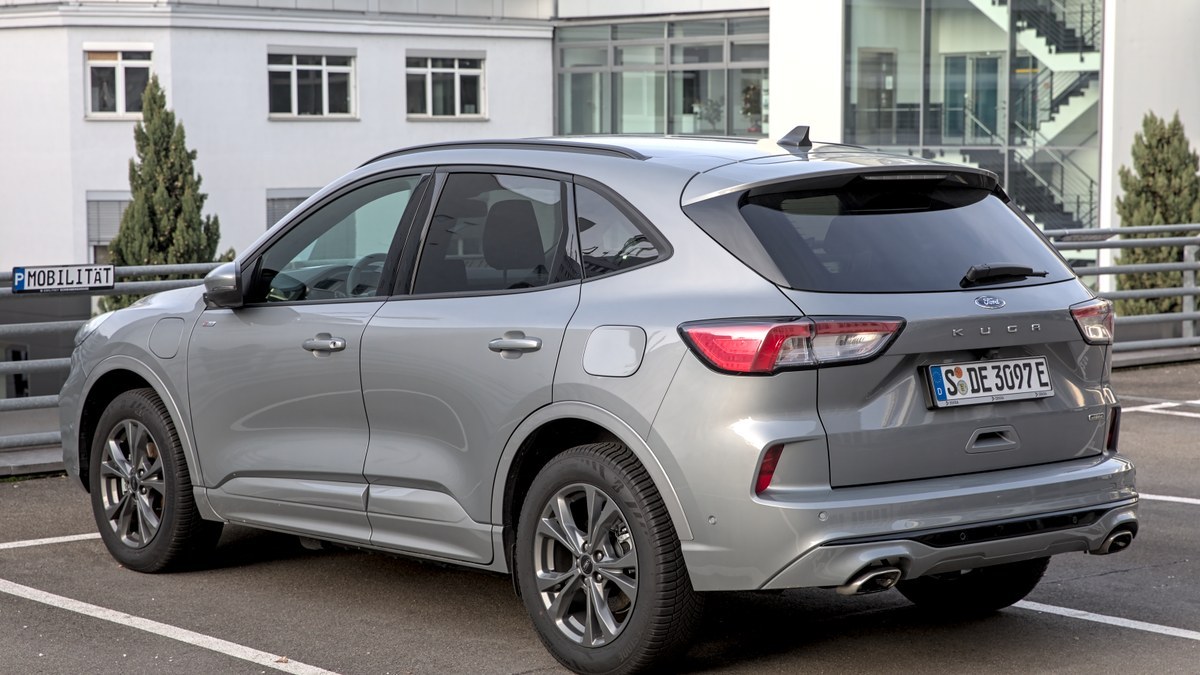
| Reference: Ford Kuga PHEV | 14.4 / 12.1 kWh | Conventional Liquid HV-PTC | 65 km | 42.0 km | -35.4% | 6.7 L/100 km |
 2025🏆 125 km EV
Tiguan eHybrid (2024+)
 2025
Outlander PHEV (2025)
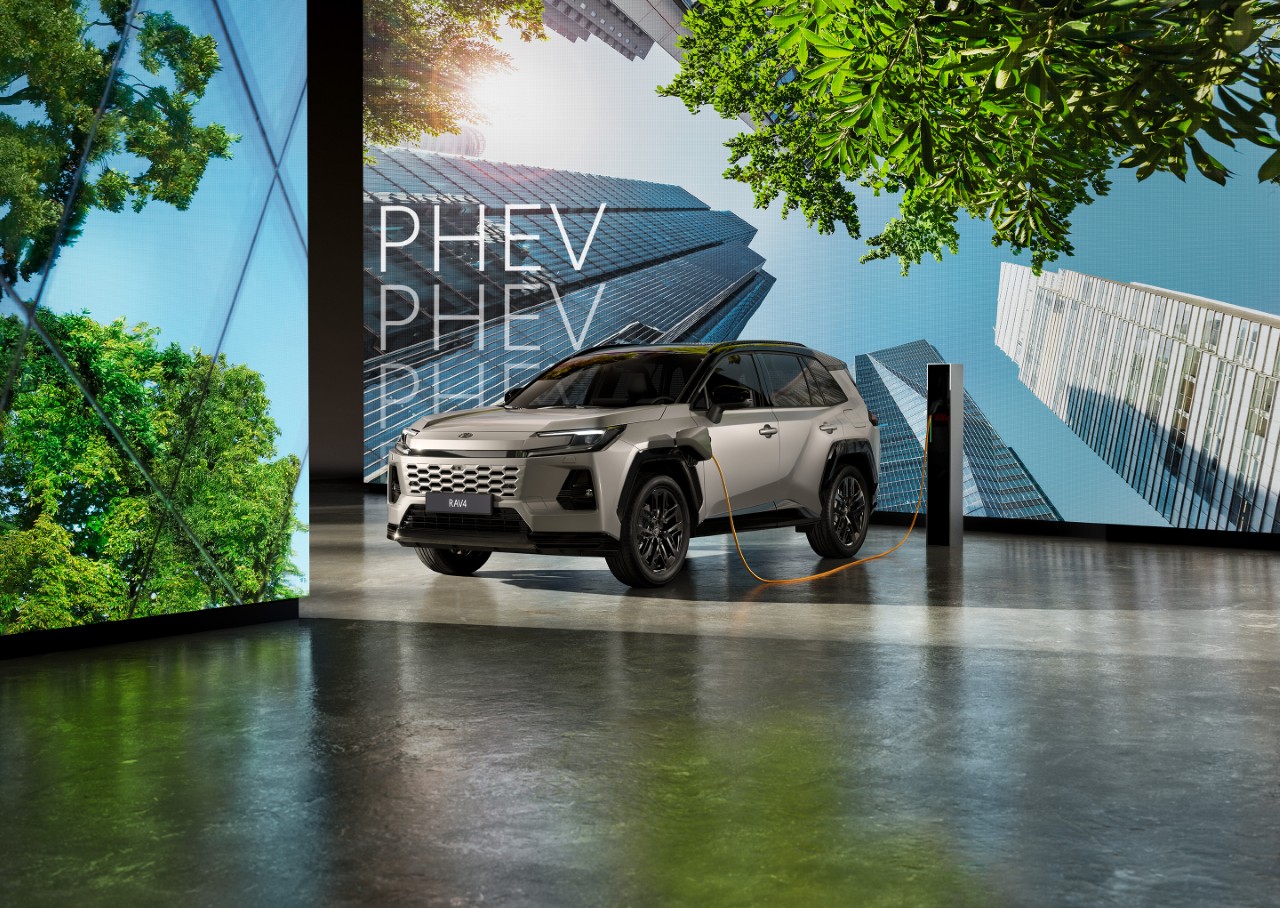 2026
RAV4 Plug-in Hybrid (2026)
5 PHEV SUVs with the Lowest Range Loss Below 0°C: In-Depth Engineering Analysis
1. Toyota RAV4 Plug-in Hybrid (2026) — The Winter Efficiency Champion (-18.5% Loss)
The new-generation Toyota RAV4 PHEV (2026), equipped with an upgraded 22.7 kWh gross (21.2 kWh net) battery pack, 50 kW DC fast charging, and an 11 kW AC onboard charger, emerged as the undisputed efficiency leader of our winter test.
- Why Does It Lose the Least Range? Co-developed with Denso, Toyota's vapor-injection heat pump maintains high thermal efficiency down to -10°C. Furthermore, Silicon Carbide (SiC) semiconductors in the Power Control Unit (PCU) cut switching losses by 10% while channeling inverter waste heat directly into the battery baseplate.
- Winter Driving Dynamics: The E-Four electronic all-wheel-drive system utilizes an independent rear electric motor to eliminate wheelspin on icy surfaces within milliseconds. Even with a depleted battery, the 2.5-litre Atkinson-cycle engine operates at 41% thermal efficiency, consuming just 6.4 L/100 km in freezing weather.
2. Mitsubishi Outlander PHEV (2025/2026) — The Nordic Winter Specialist (-20.2% Loss)
Returning to Europe with a 22.7 kWh gross (19.1 kWh net) battery and 306 PS combined output, the fourth-generation Mitsubishi Outlander PHEV boasts the deepest cold-climate engineering heritage in its class.
- Why It Excels: Its standard high-efficiency heat pump integrates the refrigerant loop directly with the battery thermal plate. When plugged in at -15°C, active battery warmers automatically bring the cells into their optimal operating window (above +10°C).
- S-AWC (Super All-Wheel Control) Advantage: Using two dedicated electric motors (85 kW front, 100 kW rear) without a mechanical propshaft, S-AWC locks torque distribution at 50:50 in "Snow" mode, preserving both directional stability and strong four-wheel regenerative braking on packed snow.
3. Volkswagen Tiguan eHybrid (25.7 kWh) — High Usable Capacity & 11 kW AC Power (-23.8% Loss)
Although the Volkswagen Tiguan eHybrid experiences a 23.8% proportional drop at -5°C, its generous 25.7 kWh gross (19.7 kWh net) battery still delivers nearly 90 kilometres of real winter electric range—easily covering daily commuting with zero tailpipe emissions.
- Engineering Secret: An intelligent split-cooling circuit between the 1.5 TSI evo2 engine, e-motor, and 6-speed eDSG gearbox rapidly transfers thermal energy when running in Hybrid mode. Crucially, its 11 kW three-phase AC charger allows full 5.5 kW cabin and battery pre-conditioning directly from the wallbox without draining a single watt-hour from the traction pack.
What is the Real-World Range of the Volkswagen Tiguan eHybrid (2024+)?
Official WLTP ratings are measured in a controlled 23°C laboratory. Test how winter sub-zero temperatures (-10°C), sustained 130 km/h highway speeds, and terrain elevation impact actual battery range on your specific commute.
4. Škoda Kodiaq iV (25.7 kWh) — Aerodynamic & Insulation Excellence (-24.5% Loss)
Sharing the MQB Evo platform with the Tiguan, the Škoda Kodiaq iV achieves a low 0.282 Cd drag coefficient despite its 4.75-metre body, using Active Grille Shutters to prevent freezing motorway headwinds from overcooling the powertrain bay.
- Winter Practicality: Delivering 92.8 km of real-world winter EV range, the Kodiaq iV minimizes blower fan draw through its invisible film-heated windscreen and four-seat heating package. Its 50 kW DC fast-charging capability replenishes the battery from 10% to 80% in just 26 minutes during winter highway stops.
5. BYD Seal U DM-i Comfort (26.6 kWh) — Direct-Refrigerant Plate for LFP Blade Cells (-26.0% Loss)
Lithium Iron Phosphate (LFP) chemistry is inherently more sensitive to sub-zero temperatures than NMC cells. However, the BYD Seal U DM-i Comfort overcomes this limitation with a massive 26.6 kWh gross (23.5 kWh net) Blade battery paired with a Direct-Refrigerant Cooling and Heating thermal plate.
- Winter Performance: Rather than relying on a secondary glycol coolant loop, refrigerant gas circulates directly through the honeycomb battery plate, warming cells 35% faster. Even with a 26% cold-weather penalty, its massive 23.5 kWh usable buffer yields 92.5 km of pure electric winter driving.
Cabin Pre-Conditioning Telemetry: The Rule That Boosts Winter Range by 18%
The golden rule for extracting maximum winter efficiency from any PHEV is pre-heating the cabin and battery via the mobile app while plugged into the grid (Pre-Conditioning). Pre-heating while unplugged drains your traction battery directly; pre-heating on a Wallbox unlocks two vital engineering advantages:
- Overcoming Thermal Inertia on Grid Power: Cabin plastics, leather seats, glass surfaces, and battery cells are raised from -5°C to +20°C using household electricity. Once you depart, the heater operates in low-power maintenance mode (0.8 – 1.2 kW) instead of full 5 kW output.
- Lowered Internal Resistance & Full Regeneration: Departing with a warm battery pack reduces ohmic losses and enables 100% regenerative braking capacity from the very first intersection.
📊 Telemetry Data: 15 km Morning Urban Winter Commute (-5°C, Tiguan eHybrid)
| Driving Scenario | Initial Cell Temp | First 15 km Avg. Consumption | Net Energy Used | Remaining Est. EV Range |
|---|---|---|---|---|
| Scenario A: Cold Soak Departure (No Pre-Heat) | -4.5 °C | 31.4 kWh / 100 km | 4.71 kWh | 68 km |
| Scenario B: Pre-Heat on 3.6 kW Schuko Socket | +9.0 °C | 23.8 kWh / 100 km | 3.57 kWh | 78 km |
| Scenario C: Full Pre-Heat on 11 kW Wallbox | +16.5 °C | 19.6 kWh / 100 km | 2.94 kWh | 86 km (+26% Advantage) |
[!TIP]
3 Golden Engineering Tips for Sub-Zero PHEV Driving:
- Use an 11 kW Wallbox Instead of a 3-Pin Schuko Plug: A standard domestic socket (2.3 – 3.6 kW) cannot fully supply a 5 kW PTC heater at -5°C; the deficit is pulled from the battery, leaving you at 94% charge on departure. An 11 kW Wallbox covers both full heating and 100% battery SoC.
- Prioritize Seat and Steering Wheel Heating: Setting the HVAC cabin blower to 19°C (Eco mode) while activating seat and steering wheel heaters transfers warmth via direct conduction, saving 1.8 kW per hour (adding roughly +10 km of electric range).
- Time Your "Battery Hold" on Motorways: On winter trips exceeding 50 km, drive the first 5 km in town on EV mode, then switch to Hybrid / Battery Hold on the motorway. The petrol engine's waste heat warms the cabin for free while preserving battery charge for zero-emission urban driving at your destination.
To compare how 100+ km WLTP models qualify for the lowest corporate Benefit-in-Kind and Dienstwagen tax brackets, visit our PHEV Tax Simulator.
Winter Tyres, Dense Cold Air Physics & Depleted-Battery Motorway Economy
Not all winter range loss stems from battery electrochemistry or cabin heating. Fundamental physics dictates that a vehicle's external road load increases substantially in freezing weather:
- Aerodynamic Air Density (ρ): According to the ideal gas law, cold air is significantly denser than warm air. Dry air density rises from 1.204 kg/m³ at +20°C to 1.316 kg/m³ at -5°C (+9.3% increase). Because aerodynamic drag scales linearly with air density (Fd = ½ · ρ · v² · Cd · A), an SUV cruising at 110–130 km/h expends 9% more power simply pushing through denser winter air.
- Winter Tyre Rolling Resistance: High-silica winter tyre compounds with dense sipes, combined with wet or slushy asphalt, increase the rolling resistance coefficient (Crr) by 12% to 15% compared to summer tyres. Because tyre pressure drops by roughly 0.1 bar for every 10°C drop in temperature, inflating tyres +0.2 bar above standard placard pressure in winter is essential.
- Transmission & Differential Fluid Viscosity: During the first 10 kilometres, cold gear oil churning losses (parasitic drag) inside eDSG, e-CVT, or DHT transmissions reduce drivetrain efficiency by 3% to 4%.
[!WARNING]
The Risk of "Fuel-in-Oil Dilution" on Ultra-Short Winter Trips:
If you repeatedly drive only 3–4 kilometres in freezing weather with a depleted battery, the cold-running petrol engine never reaches its optimal operating temperature (85°C+). Unburned fuel from cold-start enrichment condenses on cold cylinder walls and seeps past piston rings into the oil sump, diluting engine oil. Ensure your PHEV either completes short winter errands in 100% EV mode or runs a 20+ minute warm highway cycle at least once a week.
Conclusion: Which PHEV SUV Should You Choose for Winter?
Our 2026 winter efficiency test reveals a clear two-part engineering takeaway:
- Lowest Proportional Range Loss: Equipped with advanced vapor-injection heat pumps, the Toyota RAV4 PHEV (2026) (-18.5%) and Mitsubishi Outlander PHEV (-20.2%) extract the maximum distance from every kilowatt-hour in sub-zero conditions—making them ideal for drivers who park outdoors without wallbox pre-heating.
- Longest Absolute Winter EV Range: Thanks to usable battery capacities exceeding 19.5 kWh, the Škoda Kodiaq iV (92.8 km), BYD Seal U DM-i Comfort (92.5 km), and Volkswagen Tiguan eHybrid (89.9 km) deliver around 90 kilometres of real-world winter electric range below 0°C, eliminating fuel station visits throughout the workweek.
Stay Ahead on Next-Gen PHEV Releases & OTA Updates
Get notified when new European plug-in hybrid models premiere, along with real-world range benchmarks, battery chemistry insights, and software update breakdowns.
Related Models
Technical specs and live range simulations for models featured in this report
102 km EVRAV4 Plug-in Hybrid (2026)
86 km EVOutlander PHEV (2025)
125 km EV